Wednesday, October 2, 2013

Animal of the Day: Hero Shrew!

The Hero Shrew is native to the African Congo.

Thanks to it's interlocking, armor like vertebrae, the hero shrew can support 159 pounds on it's back. 159 POUNDS I COULD STAND ON A HERO SHREW WITHOUT IT BEING HURT OR DEAD OR ANYTHING.  Maybe it'd just be a bit annoyed and scared. The hero shrew supporting a human is equivalent to a human supporting an elephant.

It is believed the reason for the Hero Shrew's capability to support such immense pressure is so that the shrew can squeeze beneath logs and trunks while in search of food.

The Hero Shrew has two types of fur. One helps them sense their surroundings, and the other emits territorial scents. The Hero Shrew spreads its scent by dancing. Okay not really, but they contort their body around to emit the smell so it's kind of like dancing.


Tuesday, October 1, 2013

Animal of the Day: Vicuna!

A Vicuna can only be shorn every three years and must be caught from the wild to do so, thusly vicuna wool is a rare non edible delicacy. Though I suppose it's edible if you really want. In Inca culture it was illegal for any none royality to wear Vicuna wool.

The Vicuna is a camelid and is related to alpacas and llamas!

The Vicuna is the national animal of Peru.

Vicunas or considered to be more graceful and delicate than their relative the Guanaco.

Vicunas are shy. Vicunas lick salt from rocks and drink saltwater, they have a salt fetish.


Monday, September 30, 2013

Animal of the Day: Kiwi!

The Kiwi is the smallest of all ratitites. A ratitie is a large flightless bird. So the Kiwi is the smallest largest flightless bird.

Proportionally, the kiwi lays the largest egg of all birds. Unlike most birds, the Kiwi has bone marrow. Kiwis are the only birds with nostrils.

The Kiwi is New Zealand's national symbol.

It is unclear where the Kiwi got its name but it is thought to be either an imitation of the sound that Kiwis make, or derived from the name of a similar bird.

The Kiwi has such small wings that they are invisible beneath its feathers.

Kiwis are monogamous! Both ovaries are functional (this is unusual in most birds and in the platypus).


Sunday, September 29, 2013

Today

Today, as I biked home, across the bridge over the swamp, I found the biggest patch of wild grapes. I shoveled two handfuls into my mouth to harvest the juices out while I continued my journey.

I was glad that Josh taught me about wild grapes. I was glad that I had put just enough grapes in my mouth to satisfy without getting too much so that my mouth was hurt by the acid.

Josh taught me about the wild grapes when we went fishing and he took me to a place him and Connor used to go. I felt happy he was willing to take me to such an important place.

We also ate Chinese food that day and I taught Josh how to tie dye. My family was away at the farm. Josh spotted a large military truck for sale. He said the mileage was most positively terrible.  He also told me about when he was younger and he was in fiddler on the roof with his dad and times were harder and he would ride in the truck with his dad in the cold cold winter and he liked those times even though they were hard. But now that I think of it he might have told me that when we were on our way home from the red barn. Yup

If I could fix two things from when we went fishing but not catching and there were grapes (so I guess we caught grapes) I would fix that I was moody for some of the time and fix that I ordered chicken mushroom food from mr. you because that food was not so good.

Also it would have been eventful if those punky teens who tailed us for awhile actually got out of the car and came after us just to see what team would win.

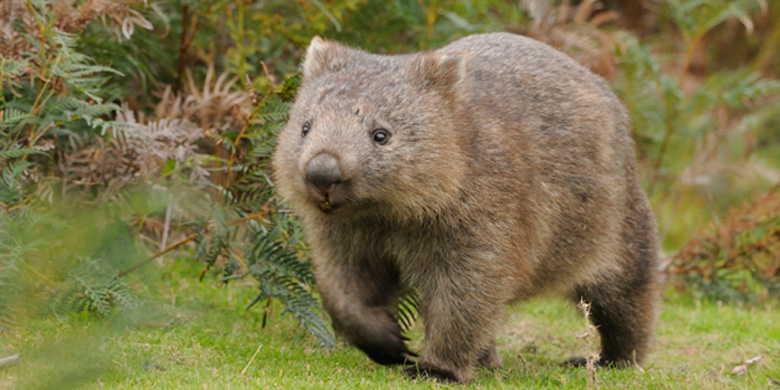
Animal of the Day: Wombat!

Off the top of my head the only thing I know is that their poop is cubic.

The wombat is not a rodent but digs rodent like burrows.

The wombat is a marsupial but it has a backwards pouch so that, while digging burrows, their babies don't become laden with dirt.

Wombats are slow creatures but, when threatened, can run up to 25mph for 90 seconds.

Dingos and Tasmanian Devils make meals of wombats. Wombats have tough behinds, largely made of cartilage, that make it hard for their prey to kill them. Wombats run into a tunnel with their butt facing prey when threatened. They may allow the prey to squeeze its head in between the ceiling and the wombat's back so the wombat can then crush it's skull. Wombats also perform donkey kicks.

When a human displeases them, wombats may bite, scratch, or bowl the human over. If you are attacked by a wombat, try climbing a tree until they leave.


Saturday, September 28, 2013

Animal of the Day: Grimpoteuthis!

Grimpoteuthises are also known as dumbo octopuses thanks to their elephant ear like fins. These fins are flapped in order to swim.

Some dumbo octopuses live 23,000 feet under the sea, the deepest death any known octopus lives. The Dumbo octopus lives in all seven seas. The largest dumbo octopus ever recorded was 6 feet long.

Unlike any other octopus, dumbo octopuses eat their prey whole. The also lay eggs constantly with no distinguished mating season.

Males have longer suckers than females and two additional tentacles.

When in need of a quick escape, dumbo octopuses shoot water through a funnel and propel themself away from the threat.


Friday, September 27, 2013

Animal of the Day: Southern Right Whale!

What distinguishes right whales from other whales is the lack of dorsal fins, callosities on the back (growths of skin that host colonies of whale lice), and the long arching mouth that begins above the eye.

These whales must stay in non tropic waters due to their immense amounts of blubber. Southern Right Whales live their lives in the waters from Antarctica to South America, South Africa, and South Australia.

Southern Right Whales go sailing for fun, the catch the wind in raised flukes and ride about.

Kelp gulls, a type of seagull, have been known to viciously peck at the whales and eat their blubber.

The right whale got it's name from the days of whaling when the right whale was the ideal whale to catch thanks to it's slow moving nature, and high levels of blubber.